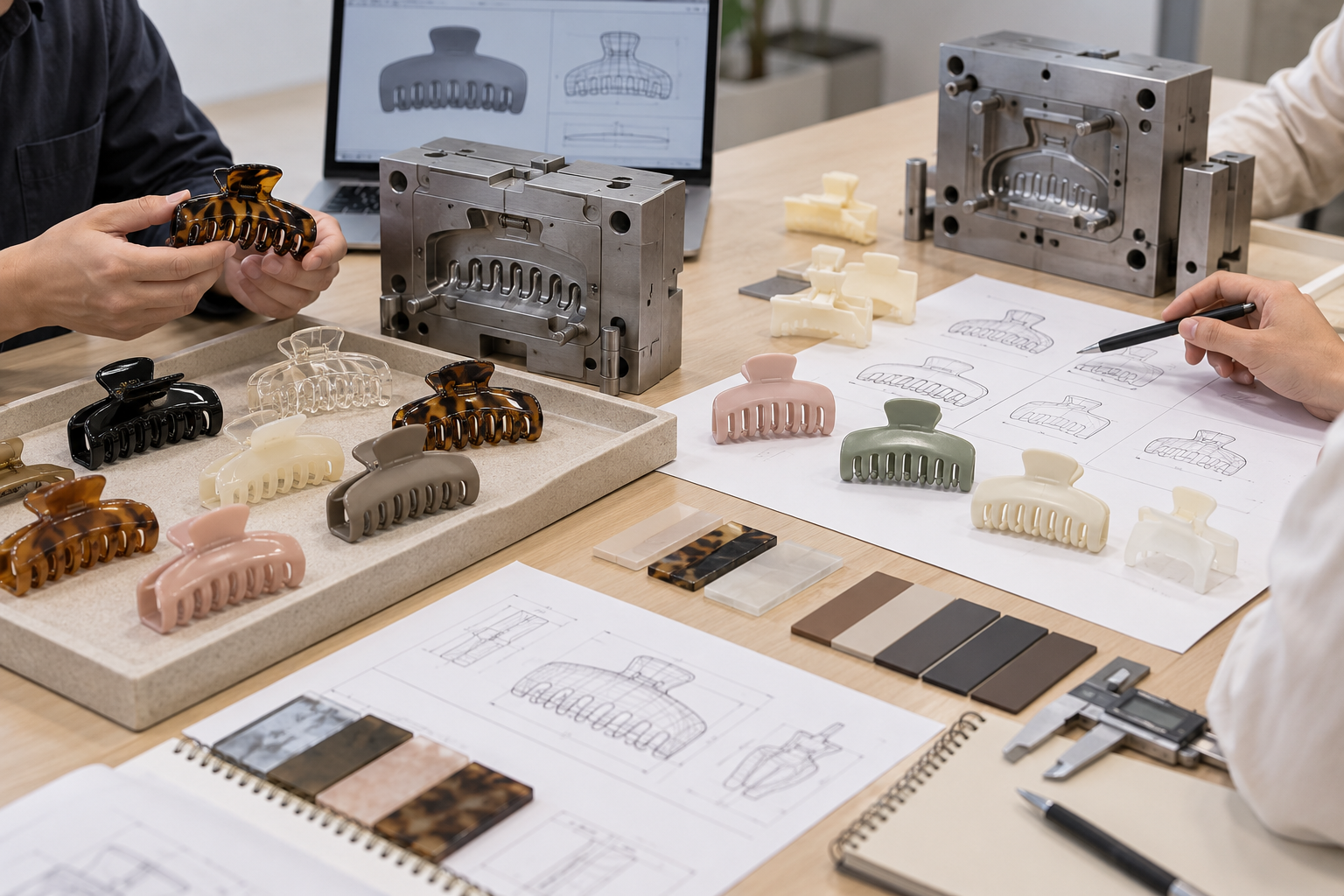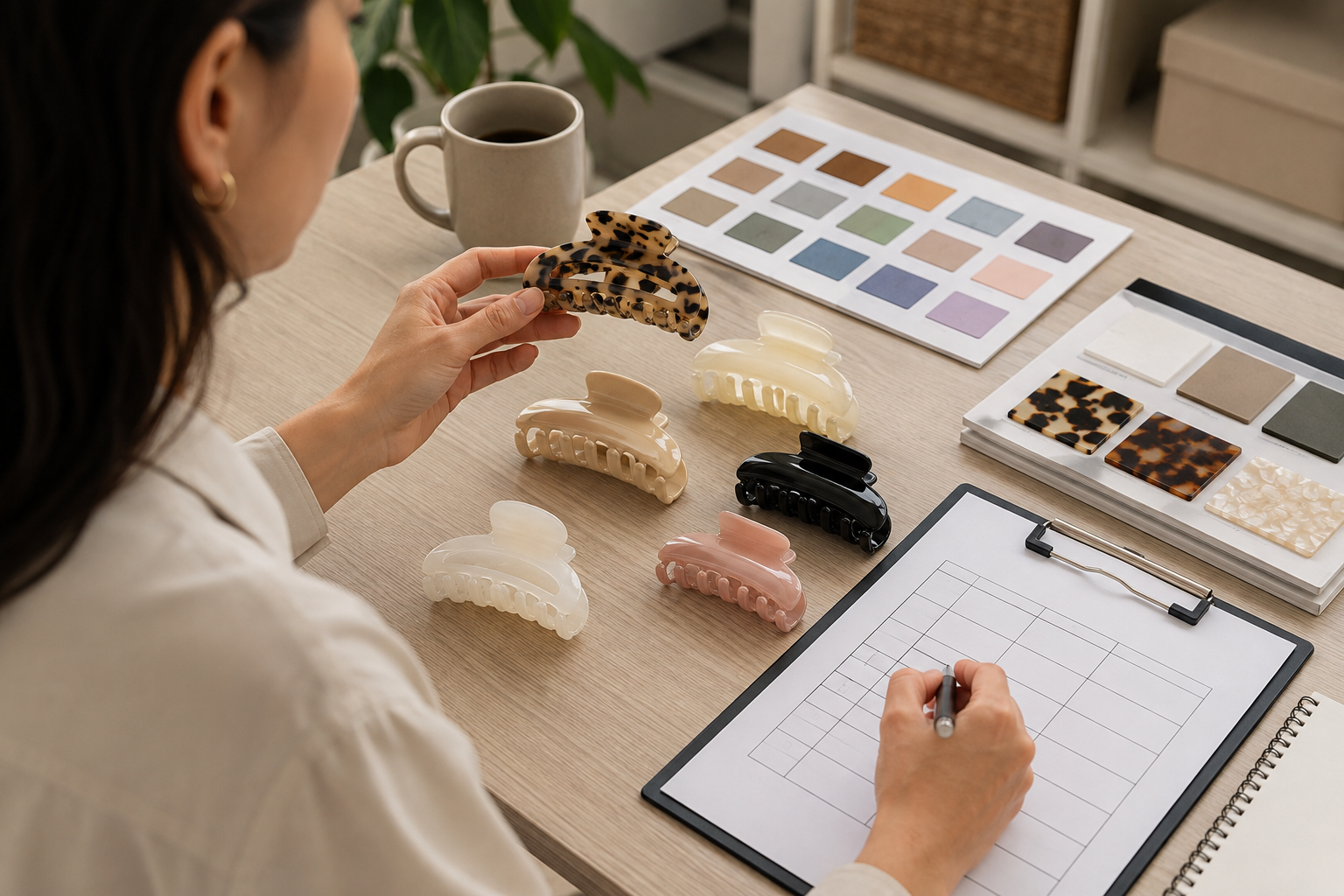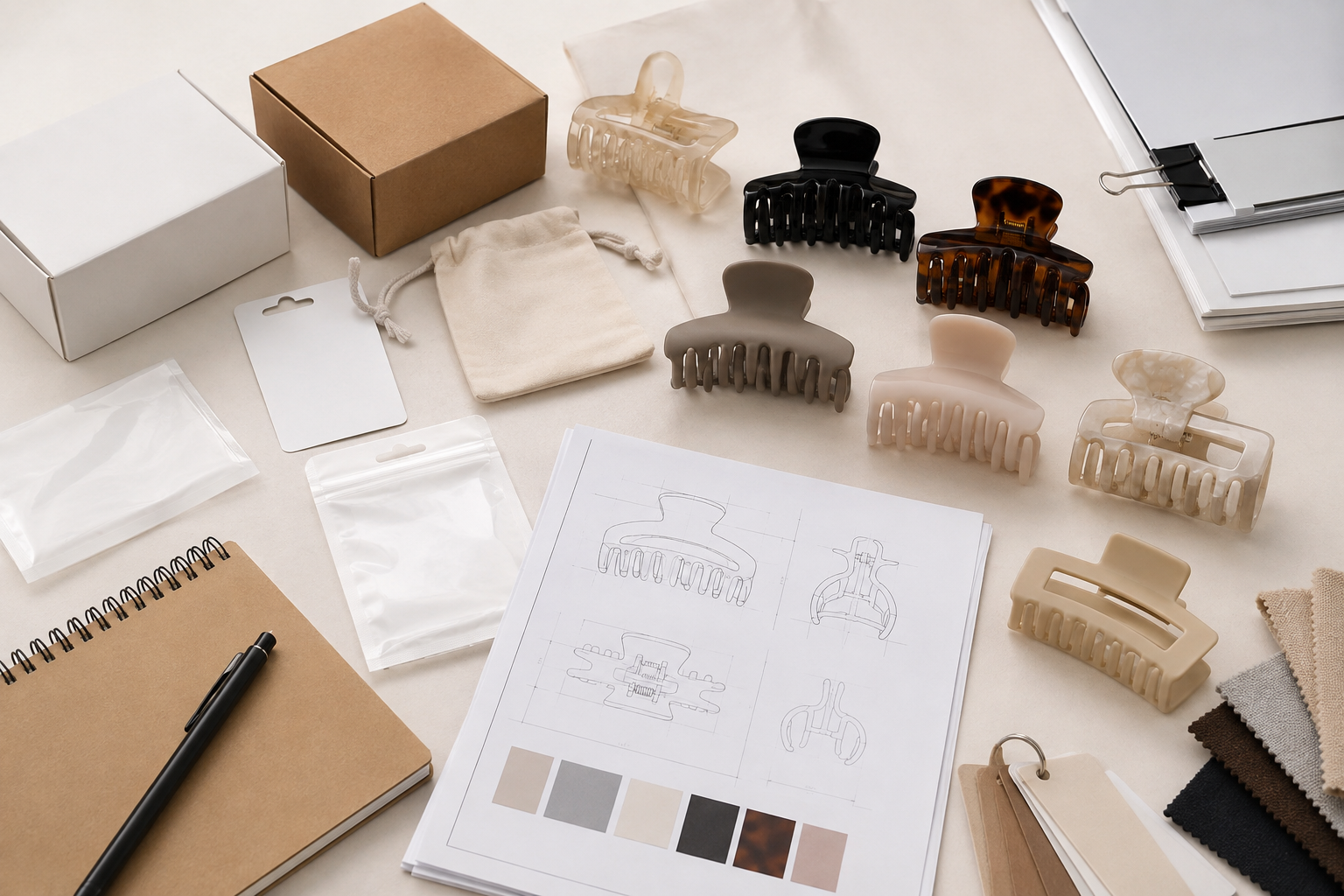
Choose wholesale claw clips by comparing a defined product specification, physical samples and an itemized quote—not photographs or unit price alone. Keep each shortlisted style tied to a model reference, intended use and quantity allocation.
The workflow below separates product selection from order confirmation, so an attractive clip does not become a bulk purchase before its details are agreed.
Define what each style must do in your assortment
Start with the customer and hairstyle you intend to serve. Treat those as sampling requirements rather than assuming a size label guarantees suitability.
For each candidate, record:
- Intended use, such as a half-up style or full updo.
- Hair types you want to evaluate during sample review.
- Target retail price and purchasing budget.
- Model code or reference image.
- Proposed quantity and color allocation.
If you are considering several colors, ask how the supplier applies minimum quantities before finalizing the mix. Do not assume an order total satisfies every style or color requirement.
Compare product references, not style names alone
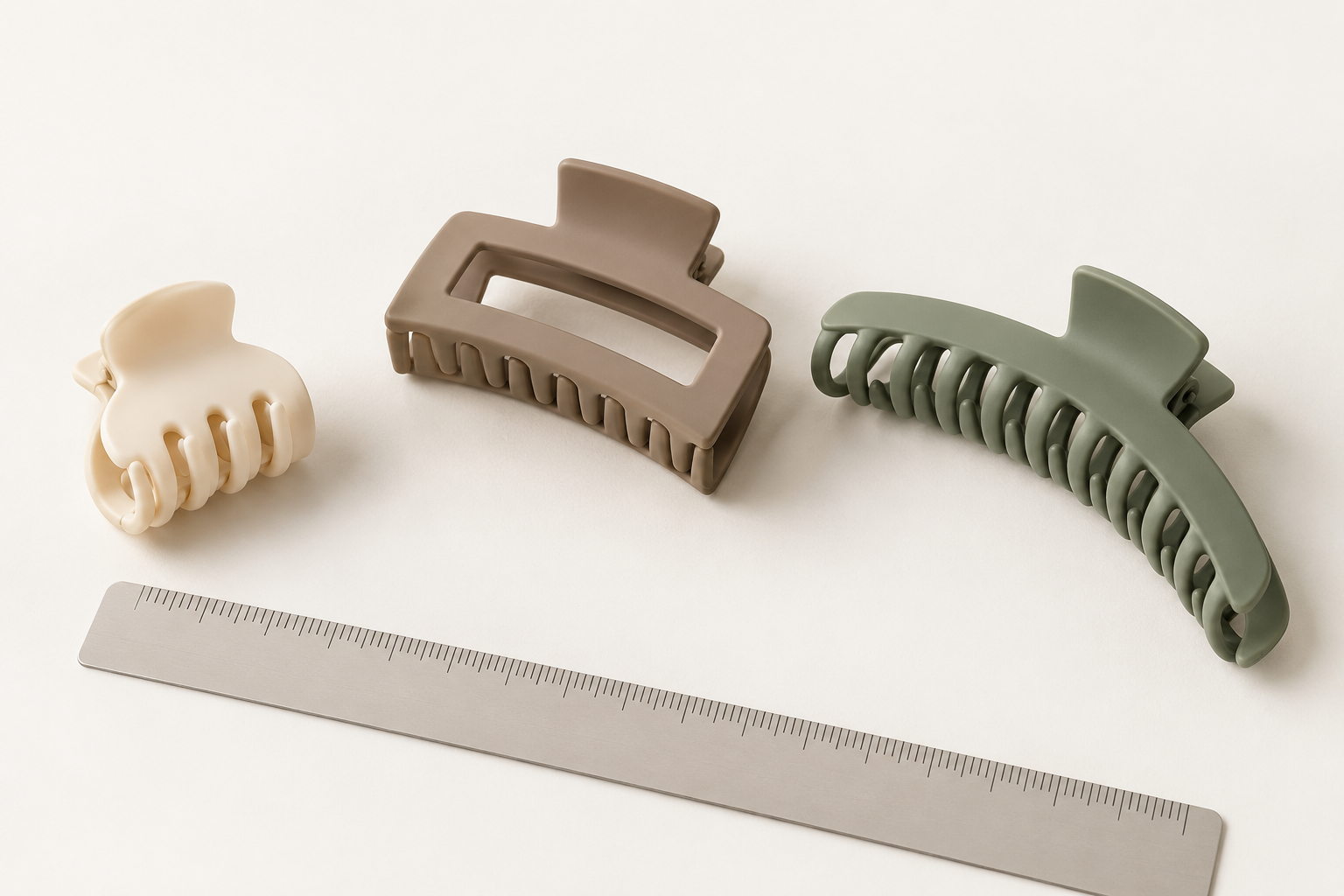
Record overall length with its unit, then compare the outer profile, opening, arms and tooth layout.
Compare candidate shapes and structures before choosing samples. Keep your wholesale shortlist focused on which references deserve samples, rather than rebuilding a complete shape catalog.
Separate an existing-mold candidate from a design that requires new geometry. At ClawClipFactory, existing-mold products can be recommended from buyer size, shape and sourcing requirements. Ask the supplier to review tooling separately if your proposed shape differs from an existing model.
Specify material by model, too. ABS and PC are ClawClipFactory’s main company-level materials, but that does not make every model ABS or PC: the published CL-001 reference specifies PP. Ask for the selected model’s material to appear in the quote.
Review samples against your intended use
Request physical samples before committing to bulk production. Product photos are useful references, but sample review should cover appearance, operation and the hairstyle you intend to support.
Use a short observation checklist:
- Compare dimensions and shape with the quoted reference.
- Compare color and finish with the agreed reference.
- Inspect edges, teeth, hinge alignment and assembly.
- Open and close the clip and record how operation feels.
- Try the intended hairstyle and record the hair type and any fit concerns.
- Review the proposed packaging, if included in the sample arrangement.
These are buyer observations, not laboratory durability results. Keep notes tied to the sample’s model and revision, and send specific concerns back to the supplier rather than approving with only “looks good.”
ClawClipFactory’s normal sample lead time is about seven days, subject to requirements and arrangement. Confirm the timing for your project rather than treating it as a fixed deadline.
Compare quotes on the same order scope
Ask each supplier to quote the same model specification, quantity allocation and packaging expectations. Request separate identification of unit price, sample charges, packaging, freight and any applicable tooling or branding charges.
ClawClipFactory’s normal MOQ is 1,000 pieces per style. Confirm allocation and the project quote before committing to an assortment. Sample fees and shipping may be credited under the agreed order arrangement; do not assume they are automatically free.
Clarify who performs any requested branding. ClawClipFactory installs springs and assembles products in the factory, and packaging can be completed there. Logo customization is outsourced, not an in-house operation. Confirm its scope separately if your order requires it.
Ask for the production schedule and shipping arrangements for the actual order. Do not substitute another supplier’s published lead time for a project-specific commitment.
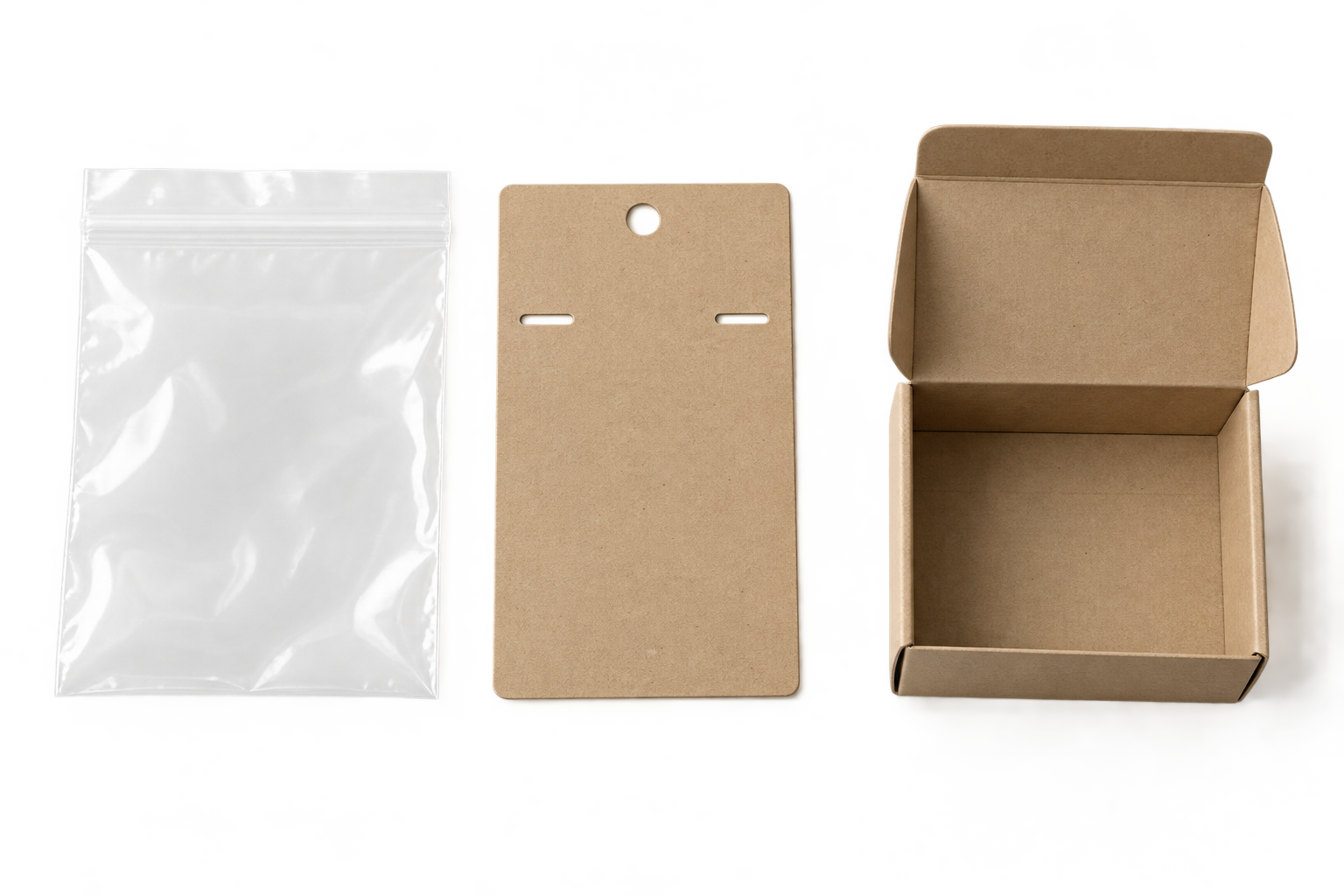
Turn the shortlist into a supplier-ready order brief
Send one consistent brief for the styles you want reviewed:
- Selected model codes or reference images.
- Intended use and sample observations.
- Dimensions, units and model-specific material.
- Color and finish references.
- Quantity by style and proposed color allocation.
- Spring, assembly and packaging expectations.
- Destination and requested delivery timing.
- Sample revisions and details still awaiting confirmation.
Before placing the order, reconcile the brief, sample reference and quotation. Ask the supplier to resolve differences in writing, especially material, color allocation, packaging and the distinction between an existing mold and new tooling.
The practical choice is not simply the lowest-priced clip. It is the candidate whose product reference, sample observations and quoted order scope match what you intend to buy.