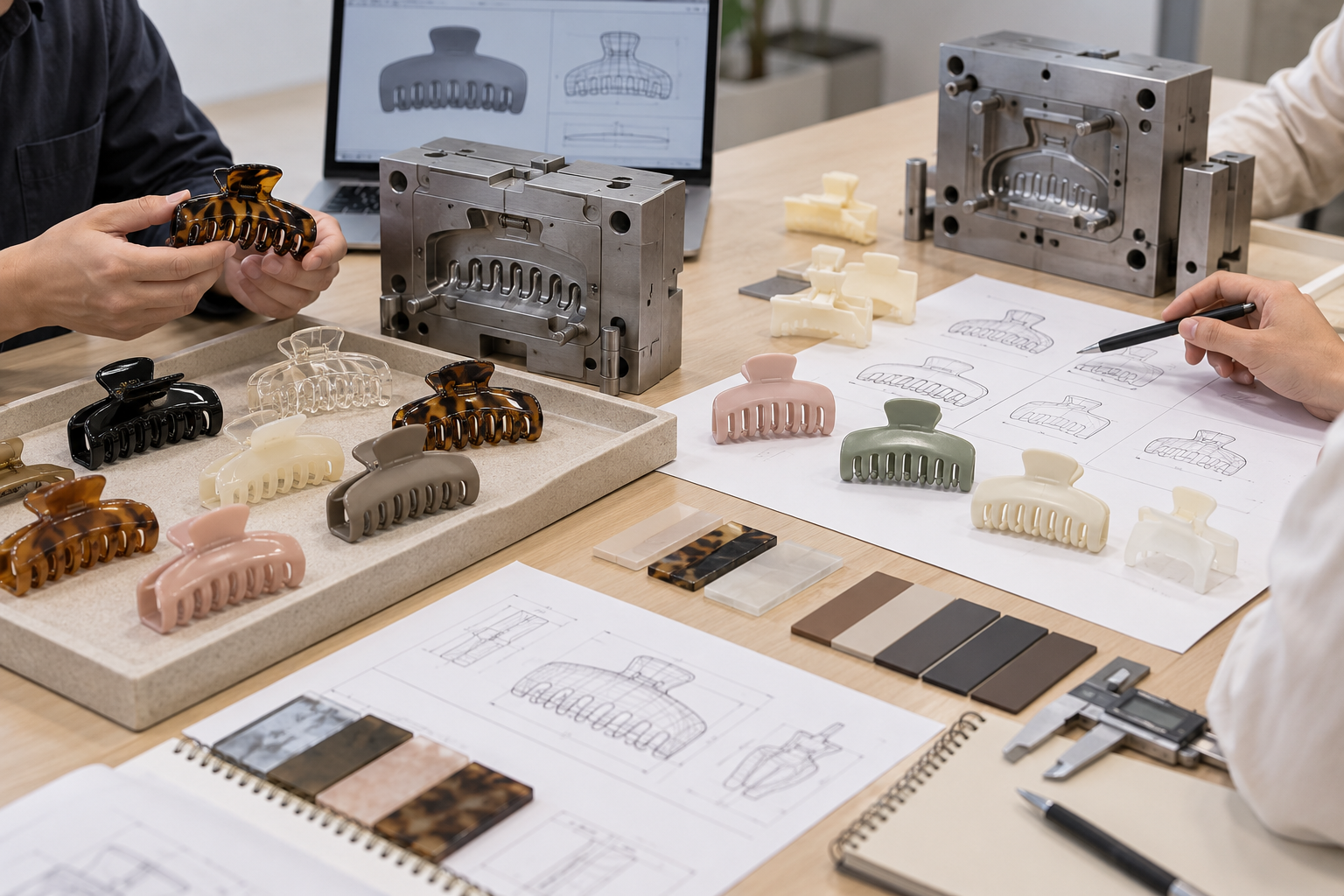
The choice between an existing mold and new tooling depends on how closely an available hair claw clip matches your required design.
This buyer FAQ covers design fit, ABS and PC materials, colors, samples, MOQ, assembly, packaging, logo coordination, and tooling questions for your RFQ.
Existing Mold vs New Tooling for Hair Claw Clips: How to Choose
First decision questions
Use these questions to identify the right production path.
- Does the available design match the required silhouette, dimensions, teeth, hinge area, and decorative details?
- Can the selected ABS or PC material be used with the proposed mold?
- Which features can be customized without changing the mold?
- Would the requested logo, color, or packaging require separate confirmation?
Related: Explore plastic hair claw clip products.
What an Existing Mold Means for a Hair Claw Clip Project
Details to confirm
Ask the manufacturer to review the fit before treating the product as an existing-mold option.
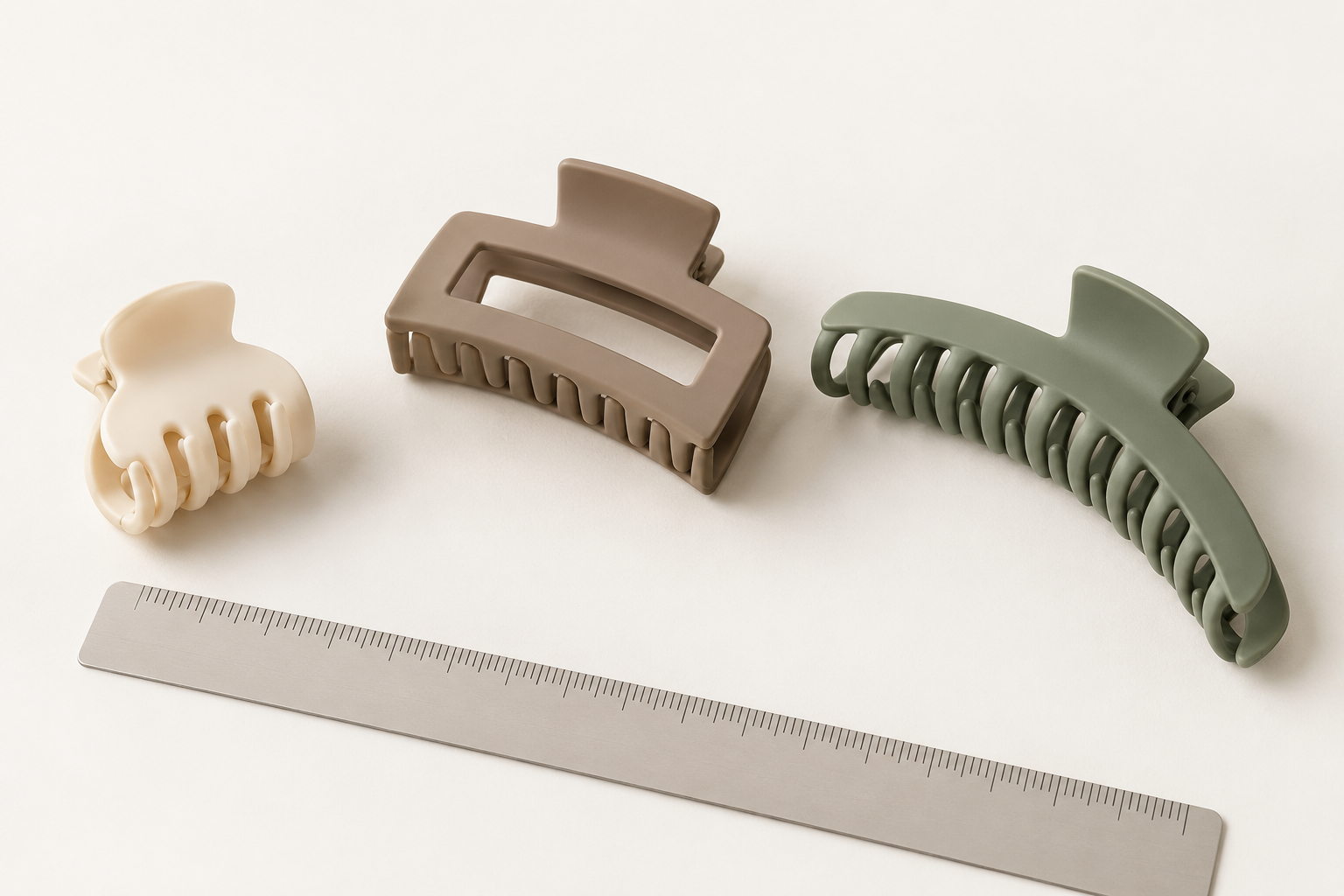
- Overall length, width, height, and approximate weight
- Jaw shape, teeth arrangement, hinge area, and spring position
- Decorative surfaces, textures, cutouts, or raised features
- ABS or PC material compatibility
- Color options and acceptable color references
- Available sample and packaging arrangements
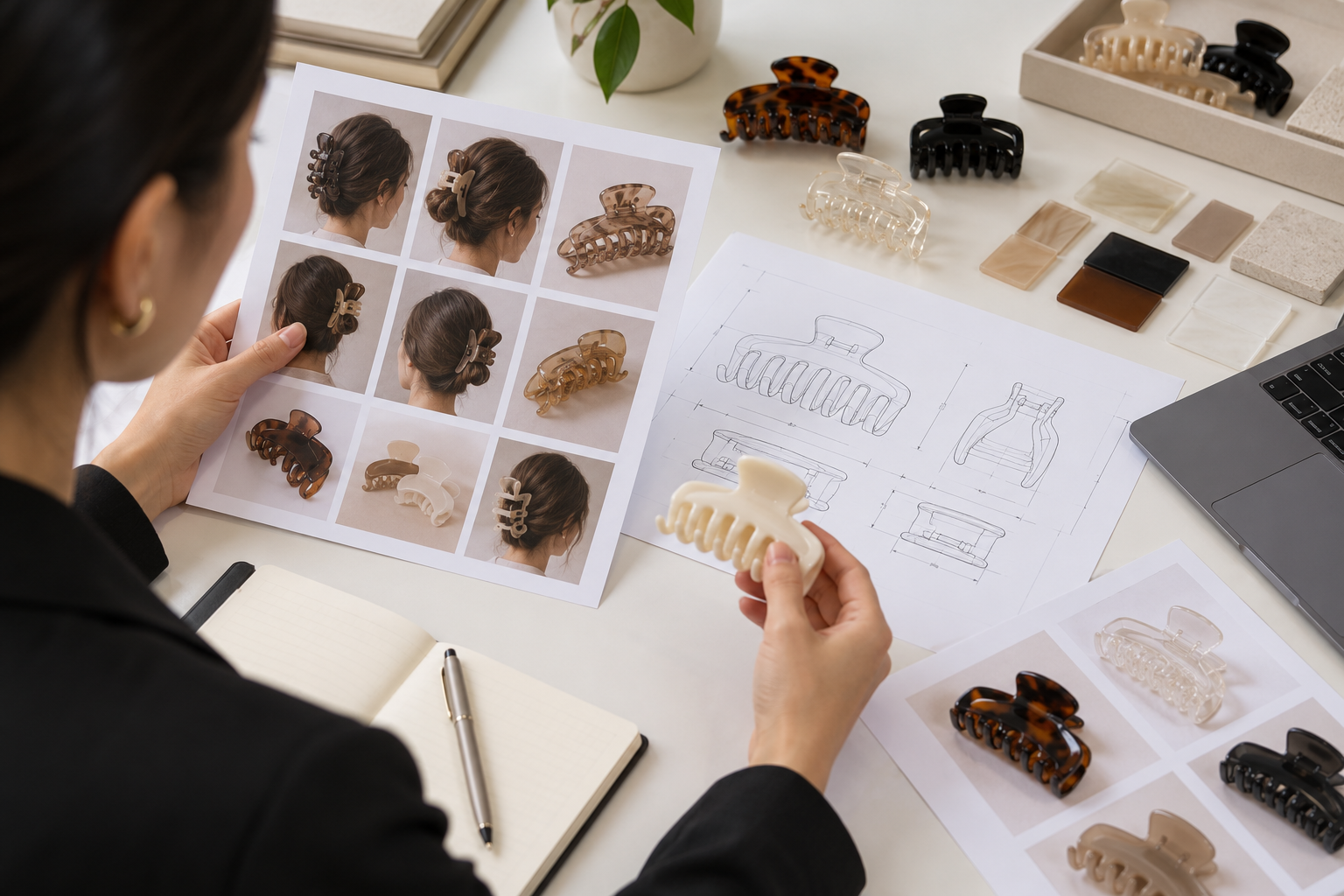
When New Tooling May Be Necessary
Design review sequence
Use this sequence before approving new tooling.
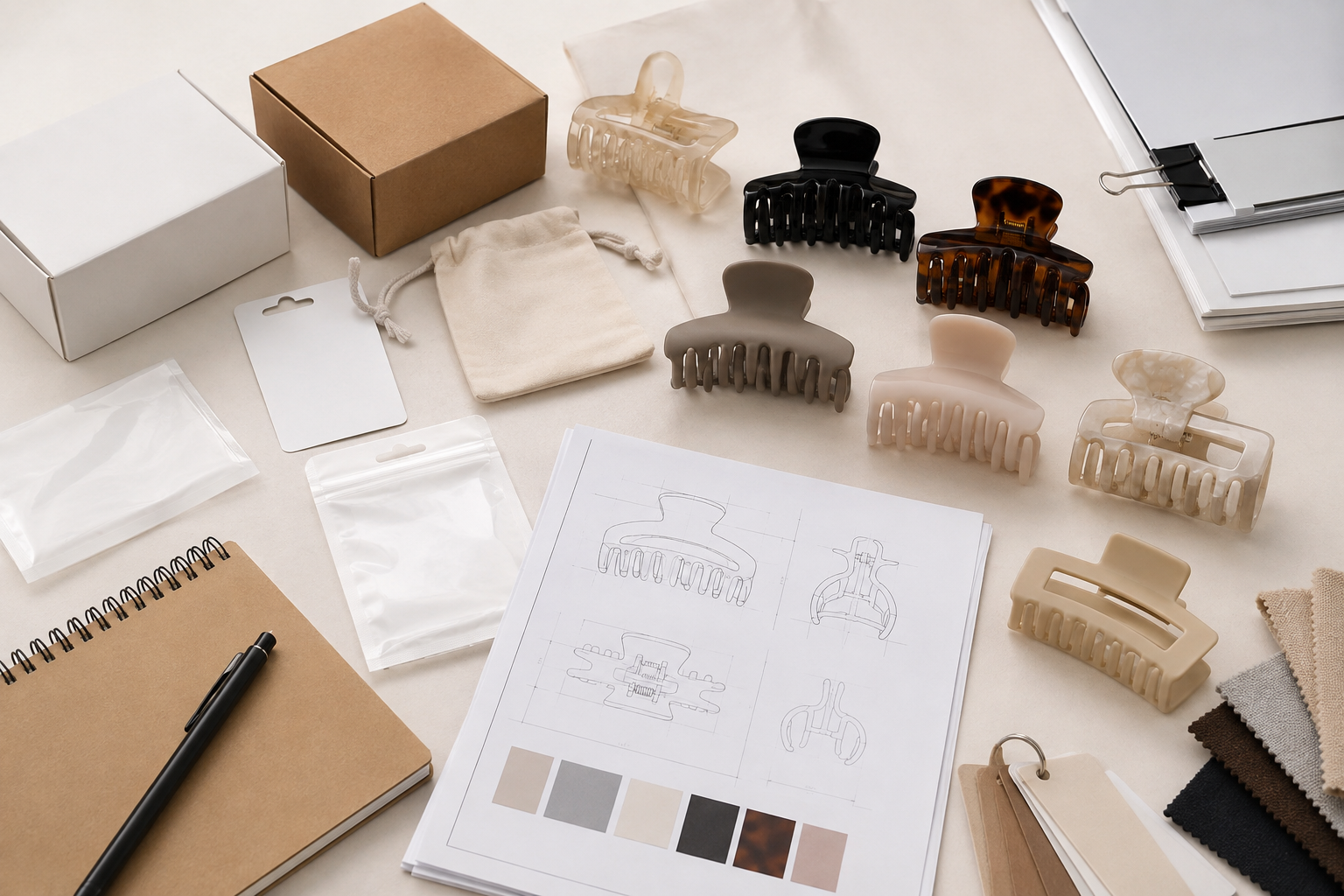
- Step 1: Submit the reference Provide a drawing, 3D file, physical sample, clear photos, or written design brief.
- Step 2: Identify required differences Mark the dimensions, shape features, decorative elements, and functional details that must change.
- Step 3: Select the material direction State whether you are considering ABS, PC, or need guidance on the suitable option.
- Step 4: Review the proposed scope Ask what the mold will cover and which details require separate confirmation.
- Step 5: Approve a sample plan Confirm how design review and sample approval will work before proceeding.
Related: Learn about custom tooling and new mold development.
Existing Mold vs New Tooling: Key Decision Factors
Buyer decision comparison
Compare the questions to confirm with the manufacturer.
| Decision factor | Existing mold discussion | New tooling discussion |
|---|---|---|
| Design fit | Confirm whether an available style matches the required design. | Confirm whether the requested differences require new mold development. |
| Material | Ask whether ABS or PC suits the proposed mold and design. | Confirm the material direction during design and mold review. |
| Customization | Ask which colors, logo treatments, and packaging options can be added. | Define which custom features belong in the mold scope and which are separate. |
| Sampling | Confirm paid sample availability and whether the sample represents the selected design. | Confirm how design review and sample approval will be handled. |
| MOQ | Confirm the applicable MOQ for the selected style. | Confirm the MOQ for the custom style before approving tooling. |
| Commercial terms | Ask about mold scope, revisions, and ownership terms. | Request written confirmation of scope, revisions, and ownership terms. |
Material and Customization Considerations
Include in the material request
A clear material brief helps the manufacturer assess the product accurately.
- Preferred material: ABS, PC, or guidance requested
- Color reference, target shade, or approved color sample
- Surface appearance and decorative requirements
- Reference design or dimensional information
- Logo and packaging requirements
- Expected order quantity by style and color
Related: Compare ABS and PC material options in the FAQ.
Samples, MOQ, Assembly, and Packaging Questions
Questions to include in your request
These points help align the sample and order discussion.
- Can a sample be prepared from the existing design or proposed new-tooling design?
- What sample information should be supplied before review?
- Does the 1000 pcs/style MOQ apply separately to each design or style variation?
- Can multiple colors be included within the requested style?
- What packaging format do you require?
- Can spring installation, assembly, and packaging be included in the requested scope?
What to Ask About Tooling Before Approval
Tooling confirmation checklist
Request clear answers before authorizing mold development.
- What exact product design and dimensions are included in the mold scope?
- Which features are molded, and which are handled during assembly or decoration?
- What design files, drawings, or physical references are required?
- How will the design be reviewed before mold development begins?
- What sample or approval stage is available after development?
- How are revisions handled if the sample requires changes?
- Who owns the tooling, and what access or use terms apply?
- What happens if the project design changes after approval?
- Which costs, commercial conditions, and order requirements apply?
Logo Customization and Production Scope
Logo and packaging questions
Separate molded features from external decoration requirements.
- What artwork format and logo dimensions are required?
- Will the logo be printed or handled through another agreed decoration method?
- Is logo placement compatible with the selected product surface?
- Who coordinates the external logo and printing service?
- Can assembly and packaging be completed with the selected logo treatment?
- What packaging artwork or labeling information must be supplied?
RFQ Checklist for Hair Claw Clip Tooling
Information to submit
Organize your request around the product decision and approval process.
- Step 1: Describe the target product State the clip type, intended market, design reference, dimensions, and required functional details.
- Step 2: Attach design information Include drawings, 3D files, photos, physical samples, or marked-up reference images.
- Step 3: State material preferences Specify ABS, PC, or a request for material guidance.
- Step 4: Define colors and decoration Provide color references and explain logo, printing, or other decoration needs.
- Step 5: Confirm quantity and variations List expected quantity by style, color, and packaging configuration, while noting the 1000 pcs/style MOQ.
- Step 6: Request sample information Ask about paid samples, the 7-day sample lead time, and sample fee credit terms.
- Step 7: Ask tooling questions Request confirmation of mold scope, design approval, revisions, ownership terms, and applicable commercial conditions.
- Step 8: Define assembly and packaging State spring, assembly, packaging, labeling, and external logo coordination requirements.
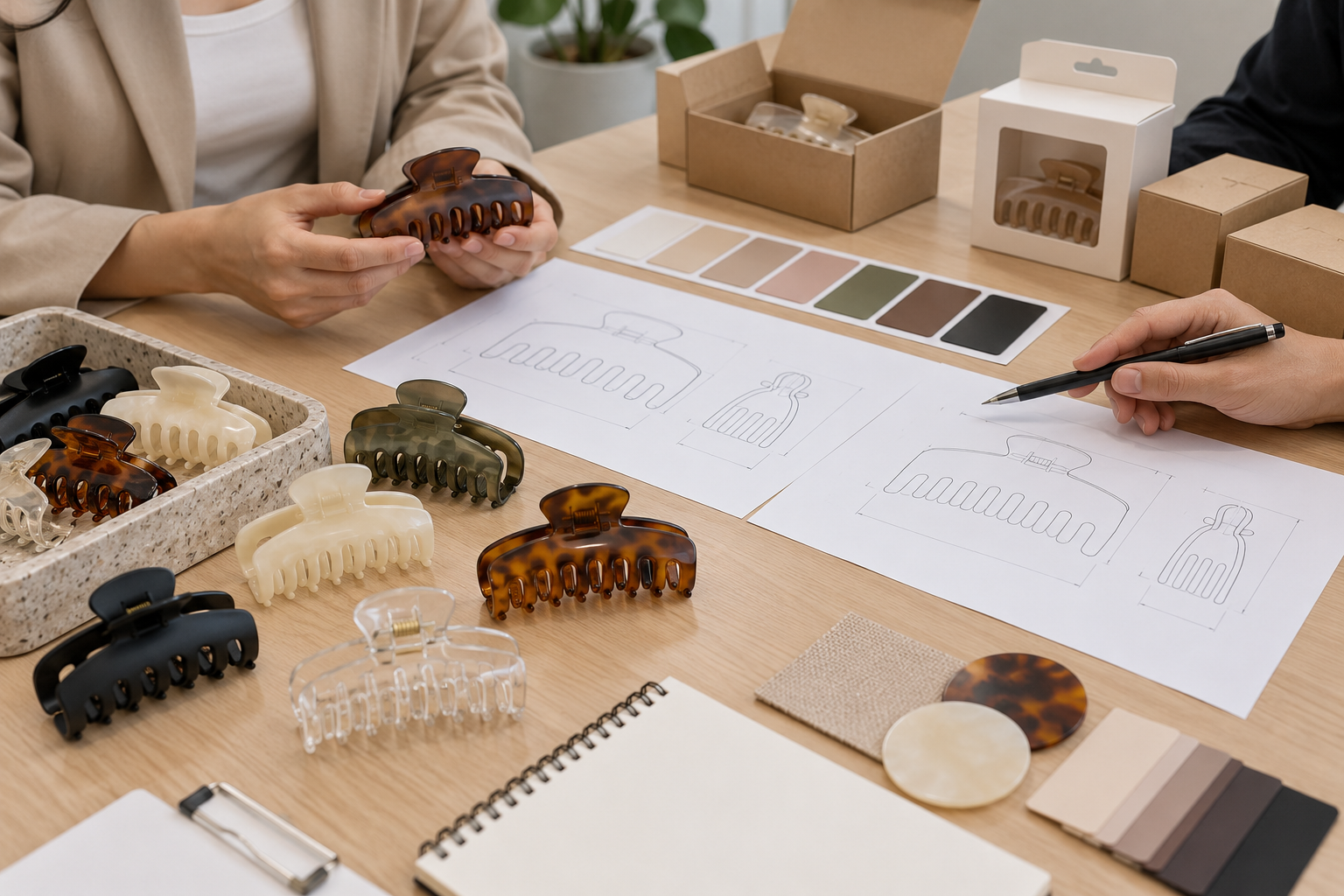
FAQ: Existing Mold and New Tooling Hair Claw Clips
These concise answers address common sourcing questions before a hair claw clip RFQ is submitted.
Related: Read more sourcing insights.
Request a Quote
Include these essentials
A focused request supports a more useful review.
- Reference design or product sample
- ABS or PC preference
- Dimensions and required design changes
- Color and logo requirements
- Expected quantity and MOQ considerations
- Sample and packaging requirements
- Questions about mold scope, revisions, and ownership terms
Frequently Asked Questions
Can an existing mold be used for my required hair claw clip design?
It may be suitable if the available design matches your required shape, dimensions, molded features, and material direction. Ask the manufacturer to review the reference before confirming.
When is new tooling necessary for hair claw clips?
Discuss new tooling when the required silhouette, dimensions, jaw structure, decorative geometry, or other product specifications cannot be matched by an available design.
What design differences may require a new mold?
Substantial changes to the silhouette, dimensions, jaw structure, decorative geometry, or other molded features may require new mold development. Confirm the scope with the manufacturer.
Can ABS or PC be used with either tooling option?
ABS and PC are approved material options. Confirm the suitable material and its compatibility with the selected design and tooling path.
Can hair claw clip colors be customized?
Custom colors can be discussed. Provide a color reference and ask the manufacturer to confirm the applicable process for the selected design.
Are samples available before confirming an order?
Paid samples are available. The approved sample lead time is 7 days, and the sample fee can be credited toward a later order.
What is the MOQ for a customized hair claw clip style?
The approved MOQ is 1000 pcs/style. Confirm how the MOQ applies when your request includes multiple colors, designs, or packaging configurations.
Can spring installation and assembly be handled with the order?
Spring installation and product assembly are completed in-house. Include these requirements in the RFQ for confirmation.
Can packaging be handled in-house?
Packaging can be completed in-house. An automatic packaging machine is available for suitable packaging formats.
Is logo printing handled in-house?
Logo customization and printing are handled by a cooperating external partner. Confirm the artwork, decoration method, placement, and coordination requirements.
What should I confirm about mold ownership and revisions?
Ask for written terms covering mold scope, design approval, sample review, revisions, ownership, access, and conditions that apply to later design changes.
Discuss Your Hair Claw Clip Tooling Route
Submit your design reference, material preference, color details, expected quantity, sample needs, and tooling questions for review.