
Buyer guide – shape and sourcing
Types of Claw Clips: Shape & Structure
Compare the outer profile, opening and teeth, then record the dimensions that matter to your project. Use verified models as references; a genuinely new geometry needs a separate tooling review.
How claw clip types are classified
Start with three visible features: the outer outline, the opening and arms, and the tooth layout. Describe these alongside a reference image before discussing material, finish and size.
General market taxonomy is not a factory catalog. A category found in the market does not prove that ClawClipFactory currently has that exact mold. Confirm actual products through the existing claw clip collection or send a reference for review.
Main shape and structure families in the market
These are overlapping ways to describe a shape, not an exclusive industry classification. A clip can have an arched outline and a distinctive handle or tooth layout. Market categories do not establish factory availability.
Curved or arched
A curved outer profile. Compare the arch, jaw geometry and tooth layout rather than relying on the family name alone.
Rectangular or open-frame
A more angular outline or visible open-frame construction. Specify the corner shape, opening and arm geometry.
Flat or lay-flat
A flatter market profile intended to sit closer to a surface. No current ClawClipFactory example is asserted here.
Geometric or decorative
Triangle, square, flower and other recognizable silhouettes. Treat the reference as a design input until mold availability is confirmed.
A buyer's comparison framework
Use the family name to start the conversation, then compare structural details that can be checked against a sample, product reference or drawing.
Swipe or scroll horizontally to compare all columns. Keyboard: focus the table and use the arrow keys.
| Shape / Type | Structural Character | Buyer Should Specify | Verified Example | Route |
|---|---|---|---|---|
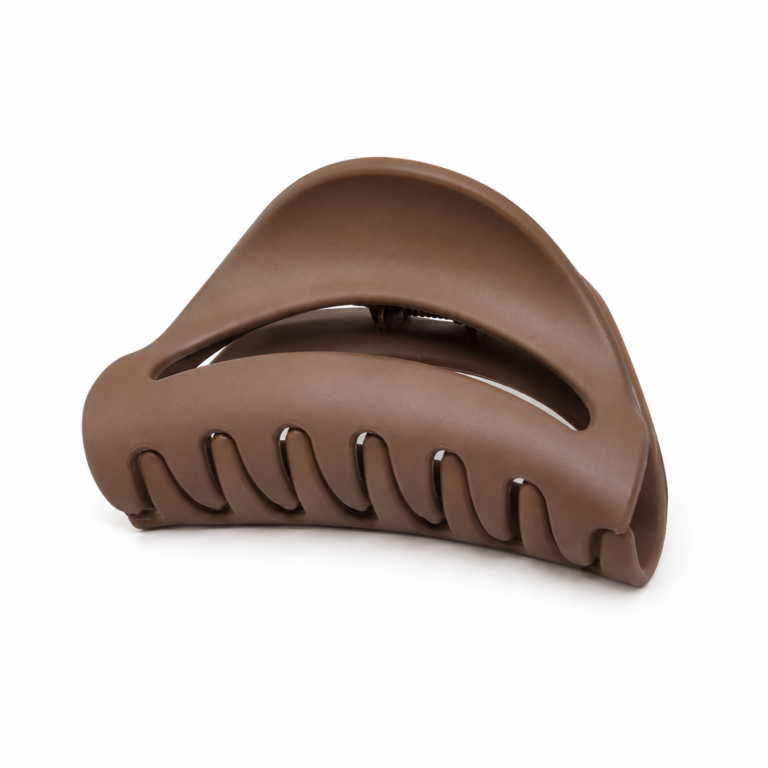
| Curved / arched | Curved outer profile and jaw | Reference image, curve and teeth | CL-001 105 mm – PP | Existing mold |
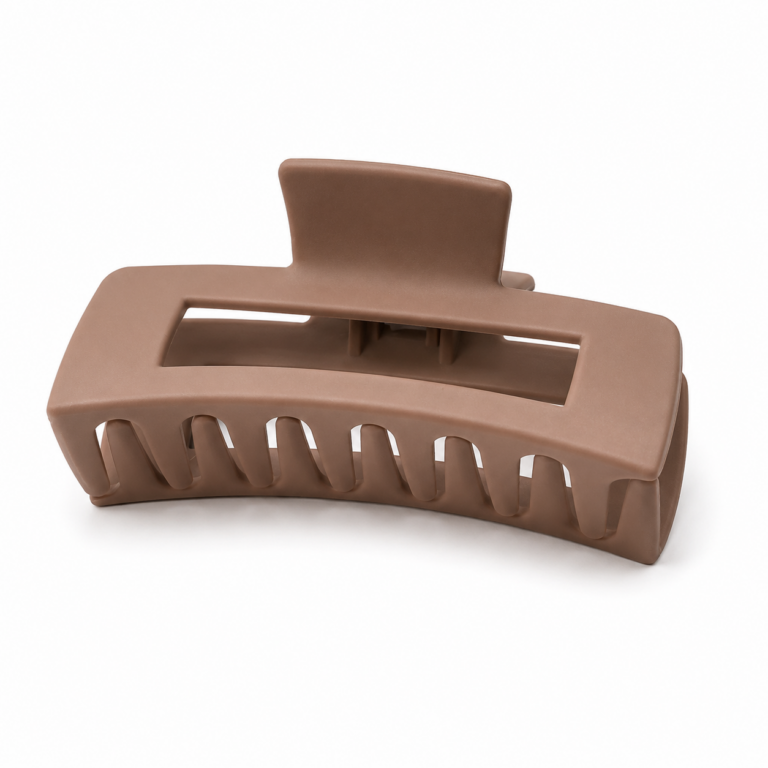
| Rectangular / open-frame | Angular outline with open structure | Corner form, opening and arm geometry | CL-002 105 mm – ABS | Existing mold |
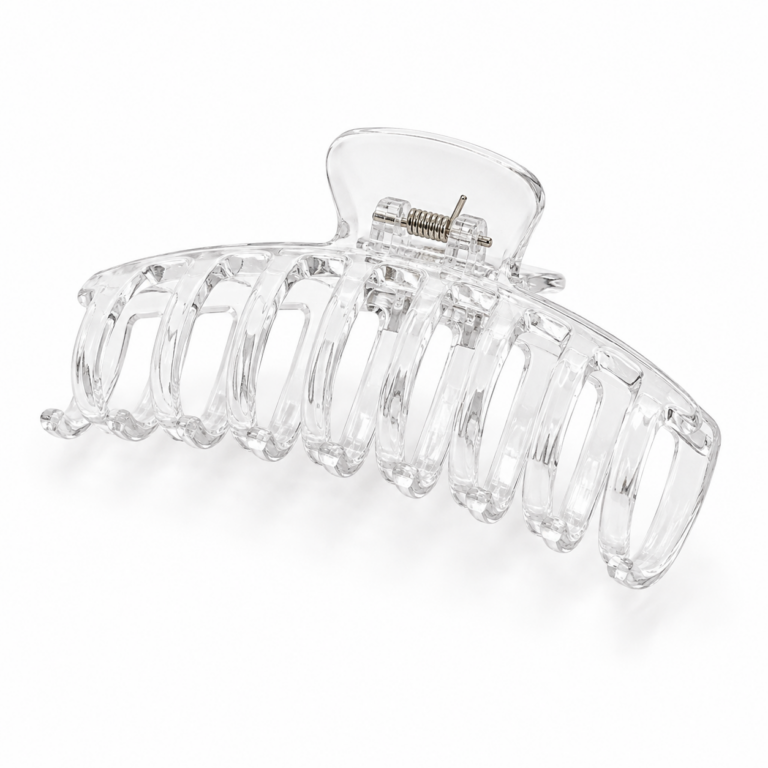
| Curved, wide-set teeth | Curved profile with spaced teeth | Profile, tooth layout and finish | CL-003 110 mm – ABS | Existing mold |
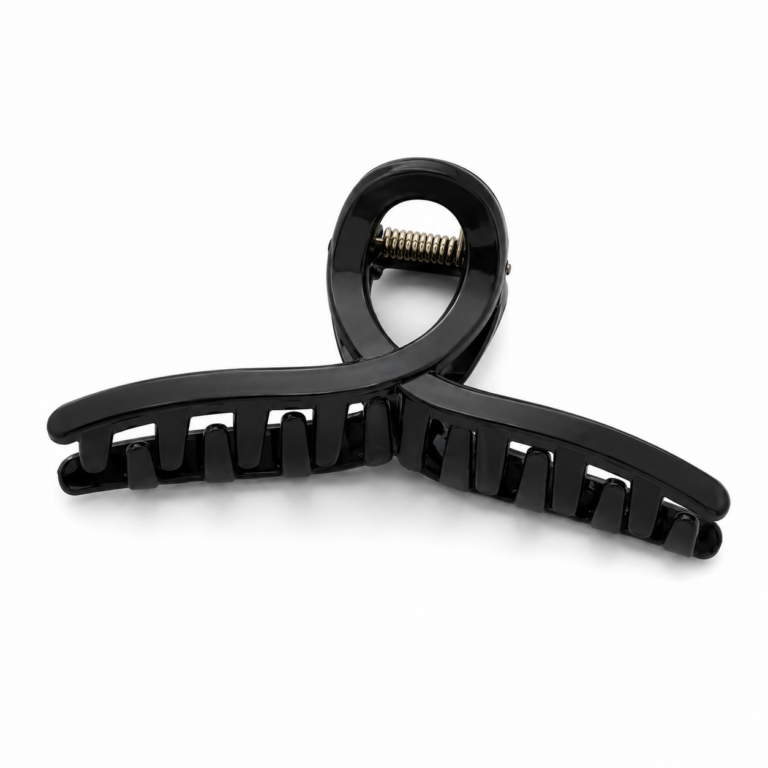
| Loop-handle / elongated-arm | Visible loop and extended arm | Handle reference, arm shape and finish | CL-004 110 mm – ABS | Existing mold |
| Other market shape | Reference-specific geometry | Drawing or image plus target dimensions | None asserted | New-tooling review |
Verified ClawClipFactory existing-mold examples
These four real products verify a model, image, material, overall length and owned-mold status. They are examples-not the complete market taxonomy or full factory catalog.
CL-001
Curved / arched shape family.
CL-002
Rectangular / open-frame shape family.
CL-003
Curved shape with wide-set teeth.
CL-004
Loop-handle / elongated-arm shape.
Specifications beyond shape
Size
Record actual overall length instead of relying only on a size label. See the Claw Clip Size Guide for the measurement workflow.
Material
Plastic, cellulose acetate, metal and textile/decorative constructions exist in the wider market. ClawClipFactory's core factory context remains injection-molded plastic with ABS and PC; PP is verified here only for CL-001.
Finish
State a glossy or matte direction and provide a color reference. Any project-specific appearance must be reviewed and confirmed during sampling.
Existing mold or a genuinely new shape?
Start with the verified collection when a current mold is close to the intended profile. A different color, finish or project specification can follow the custom claw clip route. A genuinely new geometry belongs in a new-tooling review.
Existing mold
Start here when a current mold is close to the intended profile or reference.
Review existing mold optionsNew tooling
Use this route when the required geometry cannot be matched to an available mold.
Discuss new toolingBuyer sourcing checklist
- Reference image or existing model code
- Target dimensions and measurement units
- Material direction and color/finish reference
- Spring, assembly and packaging expectations
- Estimated quantity, destination and sample-approval plan
Shape and sourcing inquiry
Model / image reference:
Outer profile / opening / teeth:
Overall length and unit, if known:
Material / color / finish:
Spring, assembly and packaging:
Estimated quantity:
Destination:
Sample approval plan:
Existing mold or new shape:
Unknown details: Please advise.
Shape & sourcing questions
Compare shape and structure, identify a mold reference and decide when tooling review is needed.
04 questionsWhich details should a buyer use to compare two claw clip shapes?
Compare the outer profile, jaw/opening structure, tooth layout, actual overall length, material direction and finish reference. Use a model code or image so the comparison stays tied to a physical reference.
Does a market style name prove that a supplier has that mold?
No. Market names are descriptive labels. Confirm mold availability against a real product, model reference or supplier drawing before treating it as an existing-mold option.
When should a buyer ask about new tooling?
Ask for new-tooling review when the required geometry cannot be matched to an available mold. Provide a drawing, reference image and target dimensions for feasibility review.
How does size information fit into a type comparison?
Overall length helps identify scale, but clips with similar lengths can still differ in curvature, internal space, jaw geometry and tooth design. Keep full measurement detail in the size specification.
Turn a shape reference into a clear sourcing brief.
Include the closest model or reference image, dimensions, material direction, color/finish, estimated quantity and destination.